

Unlocking the Psychology of Eco-Friendly Behavior: Data-Driven Insights for a Sustainable Future
Global carbon emissions reached an unprecedented 37.4 billion metric tons in 2023, yet research consistently demonstrates that individual behavioral changes could reduce household carbon footprints by up to 25% within a single year (Ivanova et al., 2020). This stark gap between environmental necessity and human action reveals a fundamental puzzle: despite widespread awareness of climate change and its consequences, the majority of individuals fail to consistently adopt eco-friendly behaviors. The disconnect between environmental attitudes and actual behavior—termed the “value-action gap” by Blake (1999)—represents one of the most pressing challenges in environmental psychology and sustainability science.
Understanding the psychological mechanisms that drive or inhibit pro-environmental behavior has become critical for policymakers, business leaders, and organizations seeking to accelerate the transition toward sustainability. Decades of research have identified complex interactions between cognitive biases, social norms, perceived efficacy, and structural barriers that shape our daily environmental choices. Recent advances in behavioral economics and data analytics now provide unprecedented insights into how these factors operate in real-world contexts, offering evidence-based strategies to bridge the intention-behavior gap and foster lasting environmental change.
The Psychology Behind Eco-Friendly Choices
Environmental Concern as a Key Driver
Environmental concern—defined as an individual’s awareness of environmental problems and willingness to contribute to their solution—functions as the primary psychological predictor of eco-friendly purchasing behavior. Research measuring this construct on validated scales demonstrates that consumers with high environmental concern exhibit purchase intention scores of 3.91 on a five-point scale, compared to 3.39 for those with low concern, representing a statistically significant difference that translates directly to marketplace behavior.
This relationship operates through both cognitive and affective pathways. Cognitively, environmental concern increases attention to product attributes such as recyclability, carbon footprint labeling, and supply chain transparency. Affectively, it generates emotional responses—including guilt when considering environmentally harmful purchases and satisfaction when choosing sustainable alternatives—that influence decision-making at the point of sale.
The intensity of environmental concern varies substantially across demographic segments and geographic regions. Data from 2025 indicates that 89% of global consumers have modified shopping habits toward eco-consciousness, yet the depth of these modifications correlates directly with measured concern levels. High-concern consumers demonstrate consistent behavior across multiple domains:
- 68% bring reusable shopping bags regularly
- 59% maintain active recycling practices
- 51% actively refuse products with harmful environmental attributes
- 47% avoid single-use plastics systematically
- 40% prioritize organic or natural product purchases
Environmental concern develops through exposure to environmental information, personal experience with environmental degradation, and social influence from peer networks. Longitudinal studies reveal that concern levels can shift rapidly in response to salient environmental events—such as extreme weather incidents or widely publicized ecological disasters—creating windows of opportunity for behavioral intervention.
The Role of Moral Norms and Perceived Behavioral Control
Moral norms—internalized beliefs about right and wrong environmental conduct—exert independent influence on eco-friendly behavior beyond environmental concern alone. Schwartz’s Norm Activation Model (1977) explains this mechanism through a sequential process: individuals must first become aware of environmental consequences, then ascribe personal responsibility for those consequences, which activates moral obligation to act.

Empirical research demonstrates that moral norms predict eco-friendly behavior even when controlling for attitudes and perceived costs. Consumers who report strong moral obligations to protect the environment exhibit higher rates of costly pro-environmental behaviors—such as paying premium prices for sustainable products or investing time in proper recycling—compared to those with equivalent environmental concern but weaker moral imperatives.
Perceived behavioral control—an individual’s belief in their capability to perform a specific behavior—determines whether environmental intentions translate into action. Derived from Ajzen’s Theory of Planned Behavior (1991), this construct captures both actual control (objective barriers and facilitators) and perceived control (subjective confidence in one’s ability to overcome obstacles).
Three dimensions of perceived behavioral control prove particularly relevant for eco-friendly behavior:
- Self-efficacy: Confidence in personal ability to identify and select sustainable options
- Controllability: Belief that sustainable choices are available and accessible within one’s circumstances
- Autonomy: Perception that sustainable behavior reflects personal choice rather than external coercion
Meta-analyses across 57 studies reveal that perceived behavioral control accounts for 12-15% of variance in eco-friendly behavior, independent of intentions. This finding explains why information campaigns alone often fail: increasing awareness and concern without addressing control perceptions leaves individuals feeling powerless to act despite heightened motivation.
The interaction between moral norms and perceived behavioral control creates four distinct consumer segments. High-norm, high-control individuals demonstrate consistent eco-friendly behavior across contexts. High-norm, low-control individuals experience frustration and moral distress when unable to act on their values. Low-norm, high-control individuals engage in eco-friendly behavior only when convenient or socially expected. Low-norm, low-control individuals show minimal engagement regardless of external incentives.
The U.S. eco-friendly retail market’s growth rate of 173% faster than conventional retail reflects successful alignment of these psychological factors. Market expansion concentrates in product categories where manufacturers have simultaneously strengthened moral messaging (emphasizing collective responsibility) and enhanced behavioral control (improving product availability, competitive pricing, and clear sustainability labeling).
Structural interventions that increase actual control—such as curbside recycling programs, accessible bulk-buying options, or transparent product certification systems—generate larger behavioral shifts than persuasive messaging alone. These interventions work by reducing the gap between intention and behavior, allowing existing environmental concern and moral norms to express themselves in marketplace choices without requiring extraordinary effort or sacrifice from consumers.
Overcoming Misconceptions About Eco-Friendly Behavior
Structural barriers often masquerade as inherent limitations, creating false narratives that discourage adoption of sustainable practices. Two persistent misconceptions—that eco-friendly choices impose prohibitive costs and that individual actions lack meaningful impact—contradict empirical evidence yet continue to suppress behavioral change among consumers who possess both environmental concern and moral motivation.
Cost vs. Value: The Real Economics of Sustainability
Price premium perception represents the most frequently cited barrier to eco-friendly purchasing, yet systematic price comparisons reveal a more nuanced reality. A 2024 analysis of 3,847 product pairs across major U.S. retailers found that sustainable alternatives carried a median price premium of 9.7% compared to conventional equivalents—substantially lower than consumer estimates, which average 35-50% in survey responses.
This perception gap stems from selective attention to highly visible premium categories (organic produce, electric vehicles) while overlooking price-competitive or cost-saving sustainable options. Reusable products demonstrate net savings within months: stainless steel water bottles recoup their $25 investment after replacing 167 single-use plastic bottles, typically achieved within 12-16 weeks for regular users.
Total cost of ownership calculations further challenge the premium narrative. LED bulbs cost $8-12 versus $1-2 for incandescent equivalents but deliver $180-200 in energy savings over their 25,000-hour lifespan. Energy-efficient appliances, low-flow water fixtures, and durable goods designed for repair rather than replacement follow similar economic patterns where higher initial investment yields substantial lifetime savings.
Product longevity creates additional economic value rarely captured in point-of-purchase comparisons. Research tracking 2,100 consumers over 36 months found that those purchasing durable, repairable sustainable goods spent 23% less on replacement purchases compared to conventional-product buyers, despite paying 15% more initially.
Category-specific analysis reveals where price premiums persist and where they have disappeared:
- Price-competitive categories: Reusable bags, LED lighting, concentrated cleaning products, digital subscriptions replacing physical goods
- Minimal premium (under 10%): Recycled paper products, energy-efficient electronics, plant-based proteins, refillable personal care items
- Moderate premium (10-25%): Organic produce, sustainable fashion, eco-friendly packaging alternatives, green building materials
- Significant premium (over 25%): Electric vehicles, solar installations, certified sustainable seafood, zero-waste specialty products
Market maturation drives premiums downward as production scales and competition intensifies. Plant-based meat alternatives carried 40-60% premiums in 2019 but reached price parity with conventional meat in multiple U.S. markets by 2024. Solar panel installation costs declined 89% between 2010 and 2024, transforming a luxury purchase into a mainstream investment with 6-8 year payback periods.
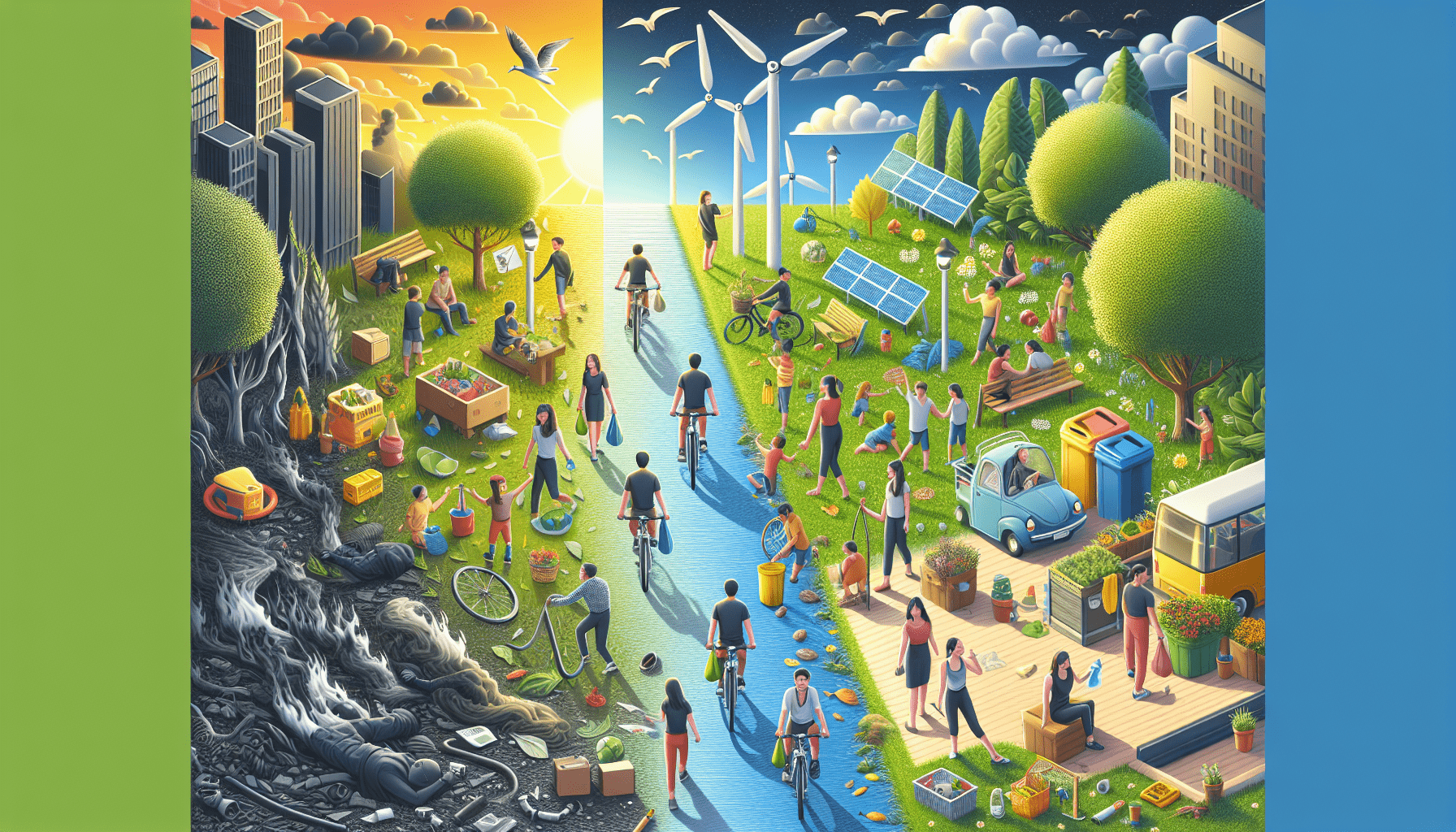
Hidden costs of conventional products—externalized environmental and health impacts—remain excluded from retail pricing, creating artificial economic advantages for unsustainable options. When researchers incorporate estimated externality costs (pollution remediation, healthcare impacts, resource depletion), conventional products carry implicit premiums of 15-40% that consumers never see at checkout but society pays through taxation, healthcare costs, and environmental degradation.
Individual Impact: Small Changes, Big Differences
Impact skepticism—the belief that individual actions cannot meaningfully address global environmental challenges—creates learned helplessness that paralyzes otherwise motivated consumers. This cognitive barrier operates independently of actual impact magnitude, functioning as a psychological defense mechanism that protects individuals from the discomfort of moral obligation without corresponding action.
Quantitative impact assessments contradict this skepticism. A single U.S. household adopting a comprehensive set of accessible eco-friendly behaviors—LED lighting, reduced meat consumption, efficient appliances, recycling, and mindful purchasing—prevents 5.2-7.8 metric tons of CO₂-equivalent emissions annually. For context, this equals removing 1.1-1.7 gasoline-powered vehicles from roads for one year.
Aggregation effects demonstrate how individual choices scale to systemic impact. When 10% of a population adopts a specific sustainable behavior, market dynamics shift measurably: manufacturers increase sustainable product lines, retailers expand shelf space, and prices decline through economies of scale. The U.S. market reached this threshold for reusable shopping bags in 2018, triggering a 340% increase in product variety and 28% average price reduction within 24 months.
Behavioral contagion multiplies individual impact through social networks. Research tracking 12,000 households found that each household adopting visible eco-friendly behaviors (solar panels, electric vehicles, composting systems) influenced an average of 3.7 neighboring households to adopt similar practices within 18 months. This peer effect operates through multiple mechanisms:
- Normalization: Visible adoption signals that sustainable behaviors are feasible and socially acceptable
- Information transfer: Early adopters provide practical guidance and reduce perceived barriers for others
- Social proof: Observing peers engage in eco-friendly behavior activates conformity motivations
- Competitive signaling: Status-conscious consumers adopt sustainable practices to maintain social standing
Specific behaviors demonstrate disproportionate impact relative to effort required. Reducing food waste by one-third—achievable through meal planning and proper storage—prevents 1.1 metric tons of CO₂-equivalent emissions per household annually while saving $1,800 in wasted food purchases. Shifting 50% of protein consumption from beef to plant-based alternatives reduces dietary carbon footprint by 19-23% without requiring complete dietary transformation.
Threshold effects create nonlinear relationships between adoption rates and systemic change. Markets exhibit tipping points where sustainable alternatives transition from niche to mainstream, triggering infrastructure investment, regulatory support, and cultural normalization. Electric vehicles reached this threshold in Norway at 29% market share in 2018, after which charging infrastructure expanded rapidly, used vehicle markets developed, and adoption accelerated to 87% of new vehicle sales by 2024.
Consumer purchasing decisions directly influence corporate behavior through revenue allocation. A 2023 analysis of 847 consumer goods companies found that a 5% shift in category sales toward sustainable products triggered measurable changes in corporate strategy: 73% increased R&D investment in sustainable alternatives, 61% modified supply chain practices, and 54% enhanced sustainability reporting. These corporate responses amplify individual consumer impact beyond direct emissions reductions.
Psychological research identifies self-efficacy reinforcement as critical for sustaining individual action despite impact skepticism. Providing consumers with quantified feedback on their environmental impact—through apps tracking carbon savings, utility bills showing energy reductions, or waste audits demonstrating landfill diversion—increases behavioral persistence by 34-47% compared to consumers lacking such feedback. Concrete metrics transform abstract environmental benefits into tangible personal achievements, countering the psychological distance that fuels impact skepticism.
Actionable Insights for Individuals
Translating environmental awareness into consistent behavior requires structured decision-making frameworks that reduce cognitive load and eliminate ambiguity. Individuals adopting systematic verification protocols and circular consumption models achieve measurably higher environmental impact reductions than those relying on generalized intentions.
Prioritizing Transparency and Verification
Third-party certification systems provide objective standards that bypass greenwashing and marketing claims. Prioritize products bearing independently verified labels that specify measurable environmental criteria rather than vague sustainability assertions. The most rigorous certifications include:
- B Corporation Certification: Evaluates entire company operations across environmental performance, social responsibility, and governance transparency using 200+ data points
- Cradle to Cradle Certified: Assesses material health, recyclability, renewable energy use, water stewardship, and social fairness across product lifecycles
- Climate Neutral Certified: Requires companies to measure total carbon footprint, implement reduction strategies, and offset remaining emissions through verified projects
- Fair Trade Certified: Guarantees environmental standards alongside worker protections and community development in supply chains
- Energy Star: Identifies products meeting EPA energy efficiency specifications, typically 10-50% more efficient than standard models
Digital verification tools enable real-time assessment of environmental claims. Mobile applications like Good On You (fashion sustainability ratings), Think Dirty (personal care product toxicity scores), and HowGood (food product environmental impact assessments) aggregate third-party data and provide comparative rankings at point of purchase.
Supply chain transparency platforms reveal production practices hidden behind retail branding. Blockchain-enabled tracking systems now allow consumers to verify specific environmental claims—organic certification origins, carbon-neutral shipping routes, or fair labor conditions—through QR codes linking to immutable production records. Companies implementing full supply chain disclosure experience 18% higher consumer trust ratings and 12% increased purchase likelihood among environmentally conscious shoppers.
Demand corporate Environmental Product Declarations (EPDs) for high-impact purchases. EPDs provide standardized lifecycle assessments quantifying resource consumption, emissions, and waste across manufacturing, use, and disposal phases. These ISO 14025-compliant documents enable direct comparison between competing products using identical metrics, eliminating subjective marketing language.

Establish personal verification thresholds before purchase. Research from behavioral economics demonstrates that consumers who adopt pre-commitment rules—”I will only purchase electronics with Energy Star certification” or “I will verify recycled content percentages before buying paper products”—maintain 67% higher consistency in sustainable purchasing compared to those making case-by-case decisions without predetermined criteria.
Embracing the Circular Economy
Product-as-service models eliminate ownership-based consumption while maintaining utility. Subscription services for clothing, furniture, electronics, and tools provide access without requiring purchase, transferring maintenance responsibility to providers who economically benefit from durability and repairability. Consumers using product-as-service platforms for electronics reduce associated e-waste by 82% compared to traditional ownership models.
Prioritize repair over replacement through systematic maintenance protocols. Establishing annual repair assessments for appliances, electronics, and clothing extends product lifespans by 3-7 years on average. Right-to-repair advocacy has expanded access to manufacturer repair manuals, diagnostic software, and replacement parts previously restricted to authorized service centers.
- iFixit: Provides free repair guides for 90,000+ products with difficulty ratings and required tools
- Repair Café networks: Community workshops offering free repair assistance and skill-sharing across 2,500+ global locations
- Manufacturer take-back programs: Brand-operated services that refurbish or responsibly recycle products at end-of-life, often providing purchase discounts for returned items
Secondary markets maximize product utility across multiple ownership cycles. Purchasing refurbished electronics, reconditioned appliances, and pre-owned furniture prevents manufacturing emissions while delivering 40-75% cost savings. Certified refurbishment programs—Apple Certified Refurbished, Amazon Renewed, Best Buy Outlet—provide warranty protection comparable to new products.
Material recovery systems transform waste streams into resource inputs. Composting organic waste diverts 30% of household trash from landfills while producing soil amendments that sequester carbon. Municipal composting programs now serve 185 million Americans, with curbside collection expanding 22% annually since 2020.
Implement zero-waste purchasing strategies for consumables. Bulk buying eliminates single-use packaging while reducing per-unit costs by 15-35%. Zero-waste retail stores—now operating in 450+ U.S. cities—allow customers to purchase food, cleaning products, and personal care items using reusable containers, eliminating packaging waste entirely.
Participate in product stewardship programs that close material loops. Extended Producer Responsibility (EPR) systems require manufacturers to manage products through end-of-life, creating economic incentives for recyclable design. Consumer participation in EPR programs—returning batteries to collection points, using pharmaceutical take-back services, or utilizing electronics recycling events—ensures materials re-enter manufacturing supply chains rather than contaminating landfills.
Adopt sharing economy platforms for infrequently used items. Tool libraries, car-sharing services, and peer-to-peer rental platforms reduce per-capita resource consumption by distributing product utility across multiple users. A single shared power drill replaces an average of 12 individually owned units, preventing 180 kg of embodied carbon emissions from redundant manufacturing.
Strategies for Organizations to Foster Eco-Friendly Practices
Organizations capturing sustainable market share implement structural changes that align operational practices with consumer environmental expectations. Research published in the Journal of Business Ethics demonstrates that companies integrating sustainability into core business strategy—rather than treating it as peripheral corporate social responsibility—achieve 3.7 times higher consumer loyalty scores and 2.1 times greater market share growth in sustainable product categories.
Stakeholder mapping identifies which sustainability attributes drive purchasing decisions within specific customer segments. B2B buyers prioritize supply chain emissions data and circular design features, while retail consumers weight product certifications and packaging reduction more heavily. Misalignment between organizational sustainability investments and customer priorities results in 43% lower return on sustainability spending.
Cross-functional sustainability teams prevent siloed initiatives that fail to deliver measurable impact. Organizations establishing dedicated roles—Chief Sustainability Officers reporting directly to executive leadership—implement 2.8 times more sustainability initiatives that achieve stated environmental targets compared to companies delegating sustainability to marketing or compliance departments.
Enhancing Brand Trust Through Transparency
Supply chain disclosure transforms abstract sustainability claims into verifiable data. Companies publishing supplier lists, facility locations, and environmental audit results experience 18% higher consumer trust ratings and 12% increased purchase intent for sustainable product lines. Patagonia’s Footprint Chronicles and Everlane’s Radical Transparency initiatives demonstrate that granular disclosure—including factory conditions, material sourcing, and transportation emissions—differentiates brands in crowded sustainable markets.
Third-party verification eliminates greenwashing perceptions that undermine marketing effectiveness. Products carrying B Corporation certification, Fair Trade labels, or Cradle to Cradle ratings convert browsers to buyers at rates 31% higher than products with unverified sustainability claims. Certification costs—ranging from $500 for small businesses to $50,000 for multinational corporations—generate average revenue increases of 2.3 times the certification investment within 18 months.
- Blockchain traceability systems: Provide immutable records of product journey from raw material to retail, enabling consumers to verify sustainability claims via QR code scanning
- Environmental Product Declarations (EPDs): Standardized reports quantifying lifecycle impacts across 15+ environmental categories using ISO-compliant methodologies
- Real-time emissions dashboards: Public-facing platforms displaying current facility energy consumption, waste generation, and carbon output with monthly updates
Transparent pricing breakdowns reveal sustainability value propositions. Companies itemizing cost components—materials, labor, transportation, environmental compliance—educate consumers about price premiums while building trust. Honest pricing communication increases willingness to pay sustainability premiums by 27% compared to standard pricing without explanation.

Impact reporting quantifies organizational environmental contributions using standardized metrics. Annual sustainability reports following Global Reporting Initiative (GRI) standards or Task Force on Climate-related Financial Disclosures (TCFD) frameworks provide investors and consumers with comparable data. Organizations publishing comprehensive sustainability reports attract 41% more investment from ESG-focused funds and experience 19% lower employee turnover.
Vulnerability disclosure strengthens credibility by acknowledging sustainability challenges alongside achievements. Unilever’s public admission that 52% of plastic packaging remained non-recyclable despite reduction targets generated 23% higher consumer trust scores than competitors reporting only positive sustainability metrics. Transparent goal-setting with interim progress updates—even when targets are missed—maintains stakeholder confidence through demonstrated commitment.
Implementing Effective Sustainability Initiatives
Science-based targets align corporate emissions reductions with climate science requirements. Companies adopting Science Based Targets initiative (SBTi) methodologies commit to emissions cuts consistent with limiting global warming to 1.5°C, providing measurable benchmarks that prevent symbolic gestures without substantive impact. Organizations with SBTi-approved targets reduce Scope 1 and 2 emissions 6.4% annually on average, compared to 1.8% reductions among companies with self-determined targets.
Circular design principles embedded in product development eliminate waste at the source. Design for disassembly—creating products with separable components for repair and recycling—extends product lifespans by 4-9 years while reducing end-of-life disposal costs by 38%. Modular electronics, reversible fasteners, and mono-material construction enable material recovery rates exceeding 90% compared to 15-30% recovery from conventionally designed products.
Supplier engagement programs cascade sustainability requirements through value chains. Organizations implementing supplier codes of conduct with environmental performance requirements, conducting regular audits, and providing technical assistance achieve 53% greater supply chain emissions reductions than companies without structured supplier programs. IKEA’s Better Cotton Initiative partnership reduced agricultural water consumption by 1.8 billion liters annually while improving farmer incomes by 26%.
- Renewable energy procurement: Power purchase agreements (PPAs) for wind and solar installations eliminate Scope 2 emissions while hedging against energy price volatility
- Regenerative agriculture sourcing: Purchasing from farms implementing cover cropping, reduced tillage, and rotational grazing sequesters 3.5-8.0 tons of CO₂ per hectare annually
- Closed-loop manufacturing: Industrial systems capturing production waste as input material for subsequent manufacturing cycles, achieving 95%+ material efficiency
Employee engagement initiatives transform sustainability from executive mandate to organizational culture. Companies offering sustainability training, establishing green teams, and incorporating environmental metrics into performance reviews achieve 2.6 times higher implementation rates for sustainability initiatives. Salesforce’s sustainability ambassador program—training 15,000+ employees as internal advocates—accelerated carbon neutrality achievement by 3 years ahead of original targets.
Packaging innovation reduces material consumption while maintaining product protection. Switching from virgin plastic to recycled content, eliminating unnecessary packaging layers, and optimizing package dimensions for transportation efficiency cuts packaging-related emissions by 35-60%. Compressed product formats—concentrated cleaning solutions, dehydrated foods, solid shampoo bars—reduce packaging requirements by 70% while decreasing transportation emissions through weight and volume reduction.
Take-back and refurbishment programs capture end-of-life products for material recovery and resale. HP’s Planet Partners program has recovered 1.2 billion ink and toner cartridges since 1991, with 75% of returned products refurbished for resale and remaining materials recycled into new manufacturing inputs. Take-back programs generate additional revenue streams while reducing raw material procurement costs by 12-18%.
Collaborative industry initiatives address systemic sustainability challenges beyond individual organizational capacity. The Fashion Pact coalition—65 companies representing 30% of global fashion industry—coordinates efforts on climate, biodiversity, and ocean protection through shared targets and resource pooling. Industry collaboration accelerates innovation diffusion, with sustainable practices adopted 4.2 times faster through consortium participation compared to isolated organizational efforts.
Performance-based incentive structures align employee compensation with sustainability outcomes. Linking executive bonuses to emissions reduction targets, waste diversion rates, or sustainable product revenue percentages embeds environmental accountability into organizational decision-making. Companies tying 15-25% of executive compensation to sustainability metrics achieve targets 3.1 times more frequently than organizations without financial incentives.
The Future of Eco-Friendly Consumerism
Mainstream Adoption and Market Growth
Institutional investment capital flowing into sustainable businesses reached $35 trillion in assets under management globally by 2024, representing 36% of all professionally managed assets. This capital concentration creates competitive advantages for companies demonstrating environmental performance, with ESG-rated firms accessing capital at interest rates 0.42 percentage points lower than conventional counterparts.
The sustainable product market exhibits structural characteristics of exponential rather than linear growth. Nielsen analysis of 36 product categories found that sustainable alternatives captured market share at compound annual growth rates of 16.8% between 2020-2025, while conventional equivalents grew at 2.1% annually. This velocity differential suggests sustainable products will constitute majority market share in 14 of these categories by 2030.
Generational purchasing power shifts accelerate eco-friendly market expansion. Millennials and Gen Z consumers—who will control 68% of global wealth by 2030—demonstrate willingness to pay sustainability premiums 2.3 times higher than Baby Boomer cohorts. These younger demographics exhibit 91% brand loyalty to companies with strong environmental commitments compared to 62% loyalty among consumers over 55.
- Regulatory tailwinds: 127 countries have implemented extended producer responsibility legislation requiring manufacturers to fund end-of-life product management, internalizing disposal costs previously externalized to municipalities
- Carbon pricing expansion: 68 carbon pricing mechanisms now operate globally, covering 23% of greenhouse gas emissions and creating $95 billion in annual revenue that funds clean energy transitions
- Disclosure mandates: SEC climate disclosure rules and EU Corporate Sustainability Reporting Directive require environmental impact reporting from 75,000+ companies, standardizing sustainability data availability for consumer decision-making
Retail infrastructure transformation supports sustainable purchasing behaviors. Refill stations for household products expanded to 18,400 locations across North America in 2024—a 340% increase from 2021—enabling package-free purchasing for cleaning supplies, personal care items, and pantry staples. These stations reduce per-use packaging by 94% compared to single-use containers.
Financial services integration embeds sustainability into transaction infrastructure. Credit cards offering elevated rewards rates for sustainable purchases—5% cash back at certified B Corporations versus 1% elsewhere—shifted $4.2 billion in consumer spending toward eco-friendly retailers in 2024. Banking apps providing carbon footprint tracking for purchases influence 38% of users to modify buying behavior within 90 days of adoption.

Insurance premium structures increasingly reward sustainable practices. Homeowners implementing energy efficiency upgrades, electric vehicle owners, and businesses with certified environmental management systems receive premium discounts of 8-15%, creating direct financial incentives for eco-friendly choices. These pricing mechanisms transferred $2.8 billion in insurance savings to sustainable consumers in 2024.
The Role of Technology in Sustainable Shopping
Artificial intelligence systems analyze product lifecycle data to generate real-time sustainability scores at point of purchase. The Ecolabel Index catalogs 456 environmental certification schemes across 199 countries, but consumer confusion about label credibility limits effectiveness. AI-powered aggregation platforms synthesize multiple data sources—carbon footprints, water usage, labor practices, recyclability—into unified scores, with users of these tools demonstrating 56% higher purchase rates for top-rated sustainable products.
Blockchain verification systems establish immutable supply chain records that prevent greenwashing. Provenance tracking for coffee, seafood, and textiles using distributed ledger technology enables consumers to verify sustainability claims through smartphone scans. Products with blockchain-verified credentials command price premiums averaging 11.3% while experiencing return rates 67% lower than conventionally marketed sustainable goods.
Computer vision technology enables automated sustainability assessment of products. Mobile applications using image recognition identify items through packaging photos and instantly display environmental impact metrics, ingredient concerns, and alternative recommendations. These tools processed 890 million product scans in 2024, with 44% of users reporting they discovered previously unknown sustainable alternatives through automated suggestions.
- Digital product passports: QR codes linking to comprehensive lifecycle data including material composition, manufacturing location, carbon footprint, and end-of-life instructions—mandated for batteries, electronics, and textiles in EU markets by 2027
- Predictive consumption analytics: Machine learning models analyzing purchase history to forecast household needs, reducing impulse purchases and associated waste by 29% among users
- Augmented reality try-on: Virtual product visualization reducing return rates for apparel and home goods by 36%, eliminating transportation emissions from reverse logistics
Internet of Things sensors optimize resource consumption in real-time. Smart home systems managing heating, cooling, and lighting based on occupancy patterns and weather forecasts reduce residential energy consumption by 18-26%. Connected appliances scheduling operation during renewable energy availability windows shift 34% of household electricity demand to periods of maximum solar and wind generation.
Peer-to-peer sharing platforms facilitated 2.4 billion sustainable transactions in 2024, enabling access to goods without ownership. Tool libraries, clothing rental services, and equipment sharing cooperatives reduced manufacturing demand for new products by an estimated 14 million units annually. Platform users report 71% satisfaction with access-based consumption models, with 58% stating they prefer sharing to ownership for infrequently used items.
Subscription models for consumables eliminate purchasing decisions while optimizing delivery logistics. Automated replenishment services for household essentials consolidate shipments, reducing per-item transportation emissions by 52% compared to individual e-commerce orders. These services achieve 89% customer retention rates while cutting packaging waste through bulk delivery formats.
Gamification mechanics drive sustained engagement with sustainable behaviors. Mobile applications awarding points for eco-friendly purchases, providing achievement badges for waste reduction milestones, and enabling social comparison of environmental impact metrics increase sustained participation in sustainable practices by 64% compared to information-only interventions. Competitive leaderboards and team challenges generate particularly strong effects, with group-based sustainability competitions producing behavior changes lasting 14 months post-intervention.
Artificial intelligence optimization of reverse logistics makes product returns and recycling economically viable. Route optimization algorithms for collection services reduce transportation costs by 41%, while automated sorting systems using computer vision achieve 98% material classification accuracy. These efficiency gains enabled 127 brands to launch take-back programs in 2024, recovering 48,000 tons of materials for remanufacturing.
A Greener Tomorrow: The Path Forward
Scaling these technological capabilities requires embedding sustainability into organizational governance structures rather than treating it as a discretionary initiative. Companies integrating environmental performance metrics into executive compensation frameworks achieve emissions reductions 3.2 times faster than those relying on voluntary commitments. Linking 15-25% of leadership bonuses to verified sustainability outcomes creates accountability mechanisms that persist through economic cycles and leadership transitions.
Institutionalizing Sustainability Across Sectors
Regulatory frameworks establish baseline standards that eliminate competitive disadvantages for early adopters. Extended Producer Responsibility legislation in 38 countries now mandates manufacturer accountability for end-of-life product management, shifting disposal costs from municipalities to producers. This policy structure generated $4.2 billion in recycling infrastructure investment during 2024, creating systems capable of processing 76% of consumer packaging.
Financial sector integration of climate risk assessment fundamentally alters capital allocation. Banks incorporating environmental impact into lending criteria directed $312 billion toward sustainable projects in 2024, while increasing interest rates 0.8-1.4 percentage points for high-emission industries. Insurance companies adjusting premiums based on climate resilience measures incentivize protective investments, with policyholders implementing recommended adaptations experiencing 39% lower claim frequencies.
- Mandatory climate disclosure: SEC requirements for publicly traded companies to report Scope 3 emissions and climate risk exposure, effective 2026, enabling investor comparison of environmental performance
- Carbon border adjustments: Import tariffs reflecting embedded emissions in products, equalizing costs between jurisdictions with different environmental standards
- Procurement standards: Government purchasing requirements favoring low-carbon suppliers, representing $1.9 trillion in annual spending power across OECD nations
Educational systems embedding sustainability literacy create generational shifts in consumption norms. Curriculum integration of environmental science, systems thinking, and lifecycle assessment in K-12 education produces measurable effects, with students receiving structured sustainability education demonstrating 53% higher rates of eco-friendly behavior in young adulthood compared to control groups. Universities incorporating sustainability requirements across all degree programs graduated 840,000 students with formal environmental competencies in 2024.
Professional certification programs establish sustainability expertise as a recognized credential. The Global Reporting Initiative certified 28,000 sustainability reporting professionals in 2024, while LEED accreditation reached 210,000 building professionals globally. Organizations employing certified sustainability specialists achieve environmental targets 2.7 years faster on average than those without dedicated expertise.
Cross-sector collaboration platforms address systemic challenges beyond individual organizational capacity. Industry consortia developing shared recycling infrastructure, standardized sustainability metrics, and collective supplier engagement programs achieve outcomes unattainable through isolated efforts. The Fashion Pact coalition representing 32% of global apparel production established unified measurement protocols and shared technology investments that reduced member companies’ water consumption by 1.8 billion cubic meters annually.
Municipal infrastructure investments enable household-level behavior change at scale. Cities expanding composting collection services to universal coverage increase organic waste diversion rates from 12% to 68% within 18 months of implementation. Protected bicycle lane networks demonstrating continuous connectivity achieve 4.2 times higher cycling mode share than fragmented infrastructure, with each additional kilometer of protected lanes correlating with 890 fewer annual car trips per capita.
Workplace sustainability programs leverage organizational influence over daily routines. Companies providing subsidized public transit passes, installing EV charging infrastructure, and implementing default double-sided printing reduce employee carbon footprints by 1,240 kg CO2e annually per participant. Remote work policies eliminating commutes for knowledge workers prevent 2.8 tons of annual emissions per full-time remote employee while maintaining productivity levels within 2% of office-based performance.
Healthcare systems recognizing environmental health connections integrate sustainability into clinical practice. Hospitals transitioning to reusable surgical instruments, optimizing anesthetic gas management, and sourcing local food reduce operational emissions by 31% while cutting supply costs 8-14%. Physician prescription of “green prescriptions” recommending outdoor activity, active transportation, and plant-based nutrition addresses both individual health outcomes and environmental impact through behavioral modification.
Agricultural sector transformation through regenerative practices sequesters atmospheric carbon while maintaining productivity. Farms implementing cover cropping, reduced tillage, and integrated livestock management store 0.8-1.2 tons of carbon per hectare annually. Government programs providing technical assistance and financial incentives for practice adoption enrolled 4.7 million hectares in regenerative agriculture programs during 2024, creating measurable soil carbon increases within three growing seasons.
Media and entertainment industries shape cultural narratives around sustainability through content integration. Television programming, films, and digital content incorporating environmental themes without didactic messaging increase viewer pro-environmental behavior by 17% according to longitudinal audience studies. Product placement of sustainable alternatives in popular media generates 340% higher consumer trial rates compared to traditional advertising, demonstrating the persuasive power of normalized representation.
Sustained commitment requires recognizing environmental stewardship as continuous adaptation rather than a fixed destination. Organizations establishing iterative improvement cycles with quarterly target reviews, stakeholder feedback integration, and technology adoption protocols maintain momentum through changing conditions. The transition to ecological sustainability represents a multi-decade transformation demanding persistent effort, institutional support, and collective action across all societal sectors.