

The Heart of Leadership: Understanding the Psychology of Ethical Leadership
Ethical leadership represents the intersection of effective management and moral psychology. As organizations increasingly recognize the importance of values-based governance, understanding the psychological foundations that drive ethical leadership has become essential for sustainable success. This article explores the multifaceted nature of ethical leadership through a psychological lens, examining the traits, decision-making processes, and organizational impacts that define this vital leadership approach.
The Essence of Ethical Leadership
At its core, ethical leadership encompasses directing and influencing others through principles rooted in moral values and standards. Unlike leadership approaches focused primarily on outcomes, ethical leadership prioritizes both the means and the ends of organizational action.
Ethical leaders demonstrate integrity by consistently aligning their words with their actions. They make decisions guided by moral values rather than expediency, emphasizing fairness, justice, and consideration of the greater good over short-term gains. This leadership style creates a foundation of trust through transparency and accountability while ensuring that actions align with stated organizational values.
The psychological foundation of ethical leadership rests on moral consistency—the internal alignment between beliefs and behaviors that prevents cognitive dissonance. This psychological coherence manifests as authenticity, a quality that research has shown to be essential for establishing leadership credibility and fostering organizational trust.

Key elements that define the essence of ethical leadership include:
- Leading by example through consistent moral behavior
- Prioritizing the welfare of stakeholders over self-interest
- Maintaining transparency in decision-making processes
- Fostering environments where ethical considerations are explicitly valued
- Demonstrating accountability for outcomes, both positive and negative
These elements collectively form what researchers refer to as an “ethical climate”—an organizational atmosphere where values-based leadership creates psychological safety for employees to voice concerns, share ideas, and maintain their own ethical standards without fear of reprisal.
The Psychological Traits of Ethical Leaders
The psychological makeup of ethical leaders is distinct from that of their counterparts. Research has identified several key traits and capabilities that consistently appear in those who lead with ethical principles.
Emotional Intelligence and Self-Awareness
Ethical leaders possess heightened emotional intelligence—the ability to recognize and manage emotions in themselves and others. This capacity enables them to navigate complex interpersonal situations with sensitivity and appropriate responses. Studies show that leaders with high emotional intelligence can better recognize implicit biases, mediate conflicts, and create environments of psychological safety.
Self-awareness, a component of emotional intelligence, allows ethical leaders to understand their own values, strengths, weaknesses, and the impact of their behavior on others. This introspective capacity helps them maintain consistency between their stated principles and actions, reducing instances of hypocrisy that can undermine leadership effectiveness.
Empathy and Perspective-Taking
Empathy stands as a cornerstone of ethical leadership psychology. The ability to understand others’ experiences, emotions, and perspectives enables leaders to consider the broader implications of their decisions. Research in moral psychology demonstrates that empathic concern correlates strongly with ethical decision-making and prosocial behavior.
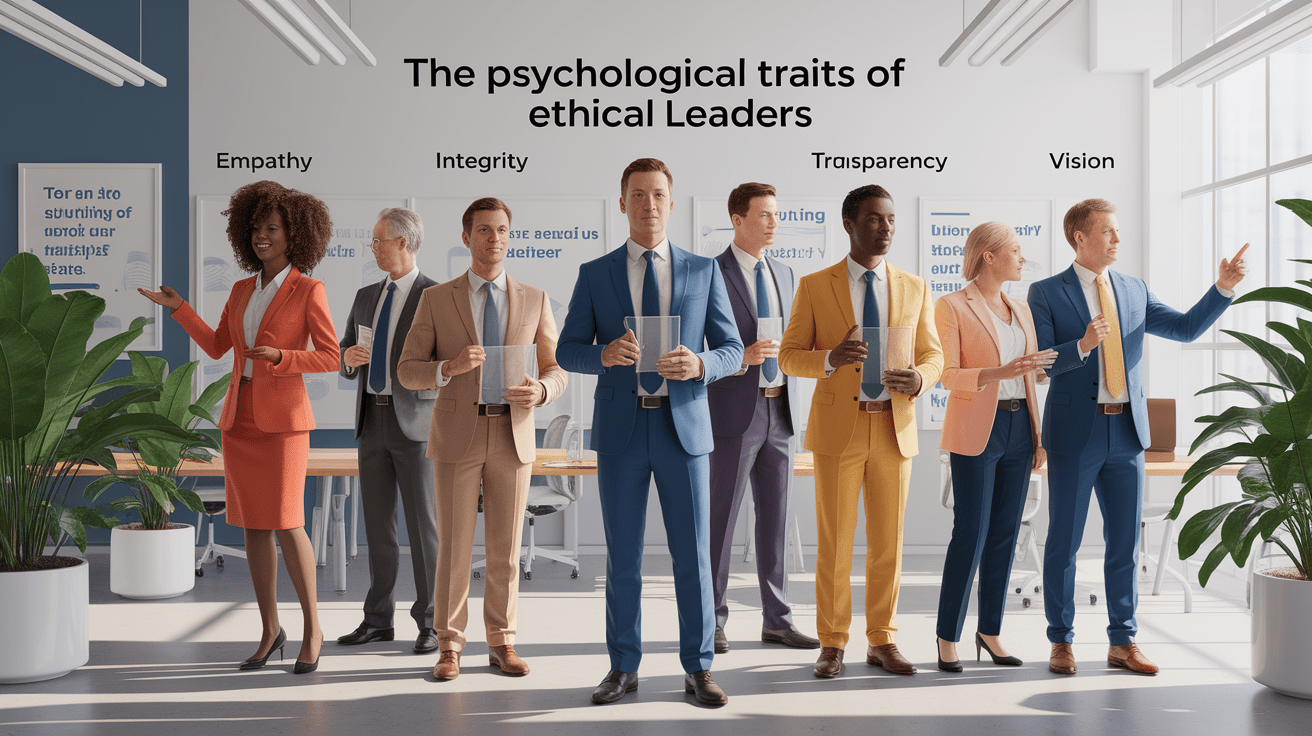
This perspective-taking capacity allows ethical leaders to anticipate how policies and decisions will affect different stakeholders, preventing unintended negative consequences and ensuring more equitable outcomes.
Moral Identity and Integrity
Ethical leaders possess a strong moral identity—they see ethical behavior as central to who they are as individuals. This self-concept drives consistency between values and actions, as behaving unethically would threaten their sense of self.
Integrity manifests as behavioral consistency across situations, particularly when facing pressure or when no one is watching. This trait is closely linked to the psychological concept of moral courage—the willingness to take ethical action despite potential personal costs.
Psychological Resilience
Adaptability and resilience enable ethical leaders to maintain their principles when facing challenges. They demonstrate the psychological fortitude to withstand pressure to compromise values for expedient results. This resilience is supported by a growth mindset that views ethical challenges as opportunities for development rather than threats.
Research indicates that ethical leaders exhibit higher levels of psychological hardiness, enabling them to bounce back from setbacks while maintaining their commitment to moral principles.
Decision-Making in Ethical Leadership
The psychological mechanisms that drive ethical decision-making distinguish principled leaders from those who prioritize expediency over values. Understanding these processes reveals how ethical leaders approach complex situations.
Moral Reasoning and Ethical Frameworks
Ethical leaders utilize sophisticated moral reasoning, moving beyond simplistic rule-following to consider principles, values, and long-term consequences. They often draw from established ethical frameworks—such as virtue ethics, deontology, consequentialism, or justice theory—to guide their thinking process.
Research demonstrates that leaders with higher levels of moral development are more likely to make decisions that balance organizational goals with broader social responsibilities. This advanced reasoning allows them to navigate the complexity of ethical dilemmas with nuance and careful deliberation.
Cognitive Biases and Ethical Decision-Making
Effective ethical leaders demonstrate awareness of cognitive biases that can undermine sound judgment. These include self-serving bias (attributing positive outcomes to personal factors while blaming external factors for failures), confirmation bias (seeking information that confirms pre-existing beliefs), and the fundamental attribution error (overemphasizing personal characteristics and underemphasizing situational factors when explaining others’ behavior).

By proactively addressing these biases, ethical leaders create decision-making processes that are more objective, fair, and aligned with organizational values. Studies show that leaders who acknowledge their cognitive limitations make more balanced ethical decisions.
Moral Awareness and Sensitivity
Ethical leaders possess heightened moral awareness—the ability to recognize the ethical dimensions of situations that others might overlook. This sensitivity allows them to identify potential ethical issues before they become problems and to consider ethical implications that might otherwise be ignored.
This capacity for ethical foresight is closely linked to what psychologists call “moral attentiveness”—the chronic tendency to consider ethics in everyday experiences. Leaders who score highly on measures of moral attentiveness demonstrate greater consistency in their ethical decision-making across different contexts.
Accountability and Responsibility
A psychological hallmark of ethical leaders is their willingness to take responsibility for decisions and their outcomes. Rather than engaging in self-protective attribution biases or blame-shifting, they acknowledge mistakes and learn from them. This accountability mindset creates psychological safety for team members by demonstrating that ethical growth requires acknowledging imperfection.
This approach contrasts sharply with the psychological defense mechanisms often employed by unethical leaders, such as rationalization, denial, or projection of blame onto others.
The Impact of Ethical Leadership on Organizations
The psychological influence of ethical leadership extends throughout organizations, shaping culture, performance, and employee well-being in profound ways.
Psychological Safety and Trust
One of the most significant impacts of ethical leadership is the creation of psychological safety—an environment where team members feel secure in taking interpersonal risks. Research indicates that ethical leadership directly enhances psychological safety, enabling more open communication, innovation, and ethical reporting of concerns.
Trust, a key outcome of ethical leadership, reduces transaction costs within organizations and creates the conditions for collaboration. When employees trust leadership’s moral compass, they experience less psychological strain and greater work engagement.
Employee Well-being and Engagement
Organizations led by ethical principles show measurably higher levels of employee well-being and engagement. Studies demonstrate that ethical leadership correlates with reduced employee burnout, increased job satisfaction, and stronger organizational commitment.

The psychological mechanism behind these benefits involves reduced cognitive dissonance—employees don’t experience the psychological tension that arises when personal values conflict with organizational practices. This alignment creates a more authentic work experience and reduces emotional labor.
Organizational Culture and Ethical Climate
Ethical leaders shape organizational culture through behavioral modeling and reinforcement of values. Research in behavioral ethics shows that leadership behavior has a stronger influence on employee ethical conduct than formal policies or statements.
The “trickle-down effect” of ethical leadership creates cascading positive impacts throughout organizational hierarchies. When leaders consistently demonstrate ethical behavior, research shows that supervisors and team members are more likely to adopt similar approaches, creating a self-reinforcing ethical climate.
Performance and Sustainability
Beyond moral considerations, ethical leadership contributes to organizational performance through multiple psychological pathways. These include increased employee motivation, stronger team cohesion, enhanced reputation with customers and partners, and reduced risks associated with unethical behavior.
Organizations led ethically demonstrate greater resilience during crises, as stakeholders extend greater trust and patience to leaders with established moral credibility. This psychological “trust reservoir” provides a buffer during challenging times and supports long-term sustainability.
Conclusion: The Lasting Legacy of Ethical Leadership
The psychology of ethical leadership reveals that leading with moral principles is not merely about following rules but about embracing a comprehensive psychological orientation toward responsibility, empathy, and integrity. Ethical leaders create environments where values alignment reduces cognitive dissonance, enhances psychological safety, and promotes sustainable organizational success.

As research in behavioral ethics and leadership psychology continues to evolve, the evidence increasingly supports the profound impact ethical leadership has on both organizational outcomes and human flourishing. By understanding the psychological traits, decision-making processes, and organizational impacts of ethical leadership, we gain insight into how principled leadership creates lasting value for all stakeholders.
Ultimately, the psychology of ethical leadership demonstrates that doing good and doing well are not competing aims but complementary aspects of truly effective leadership.