

Unlocking the Mind: The Psychological Benefits of Nature Immersion
Nature’s Healing Touch
The therapeutic relationship between humans and natural environments has gained significant recognition in recent years. Research consistently demonstrates that immersion in natural settings delivers profound psychological benefits, including measurable reductions in stress, anxiety, and depression levels.
Nature therapy, also known as ecotherapy, works by:
- Activating the parasympathetic nervous system, which counters the body’s stress response
- Reducing cortisol levels, a primary stress hormone
- Restoring attentional capacity that becomes depleted in urban environments
- Mitigating symptoms associated with various psychiatric disorders
Perhaps most encouraging is the accessibility of nature’s benefits. Studies indicate that just two hours per week spent in green spaces can significantly enhance psychological well-being and mood. This “nature prescription” is remarkably achievable for most people, even in urban environments where parks and gardens offer necessary respite.
The Japanese practice of shinrin-yoku, or forest bathing, exemplifies structured nature immersion. This mindful approach to being in nature engages all five senses and has been documented to reduce physiological markers of stress while improving reported mental well-being. Unlike more rigorous outdoor recreation, forest bathing focuses on presence rather than achievement, making it accessible to people of varying physical abilities.
The Power of Nature Connectedness
Beyond simply spending time outdoors, the psychological concept of nature connectedness—our subjective sense of relationship with the natural world—plays a crucial role in determining the benefits we receive from nature immersion. The biophilia hypothesis, proposed by biologist E.O. Wilson, suggests humans possess an innate tendency to seek connections with nature and other forms of life.
Scientific research confirms that individuals with stronger nature connection report:
- Lower levels of stress, anxiety, and depression
- Higher overall life satisfaction
- Enhanced positive emotions including calmness and joy
- Greater sense of meaning and purpose
This connection appears to operate bidirectionally—as research from the Mental Health Foundation reveals, while stronger nature connectedness predicts better mental health outcomes, positive experiences in nature also strengthen this psychological connection. This creates a beneficial cycle that supports ongoing psychological wellness.
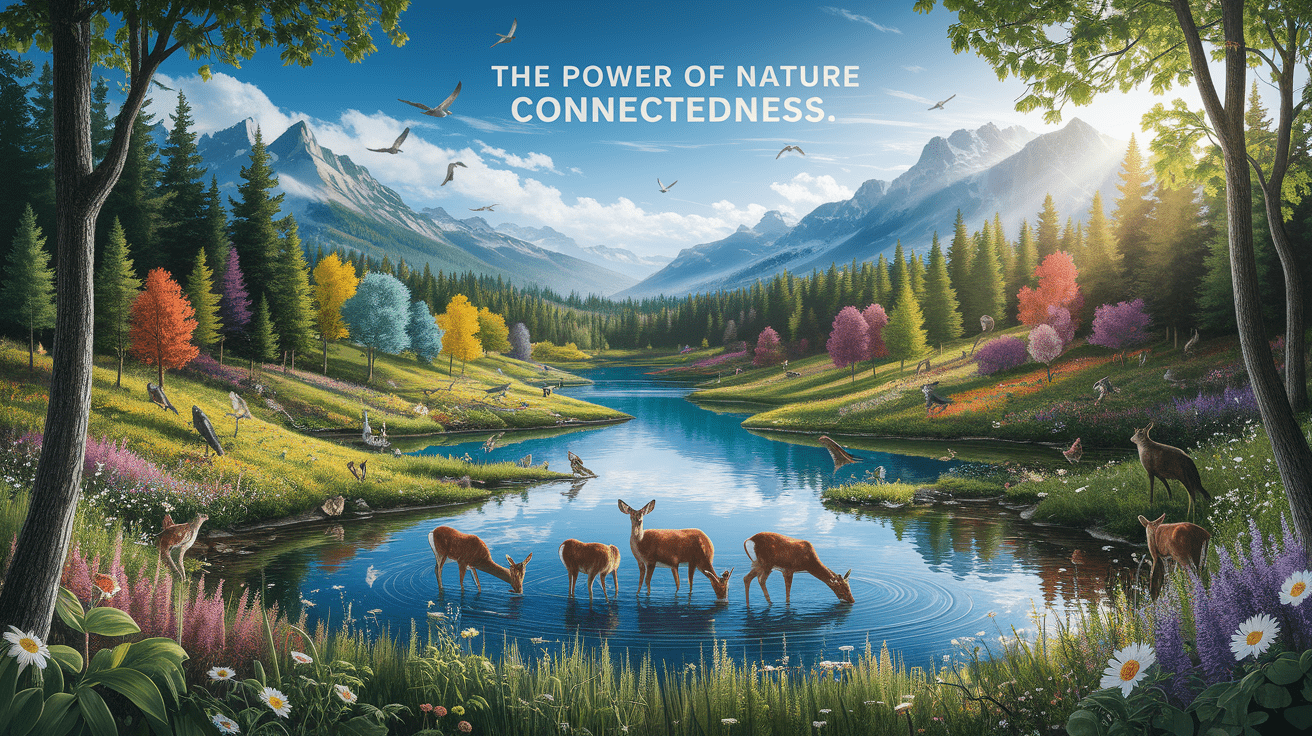
Environmental psychology research further indicates that nature connectedness motivates pro-environmental behaviors, creating a positive feedback loop between personal well-being and ecological stewardship. By nurturing our relationship with natural environments, we simultaneously support our psychological resilience and environmental sustainability.
Nature’s Role in Child and Adolescent Development
The developmental benefits of nature immersion are particularly pronounced in children and adolescents. Systematic reviews of research indicate that meaningful nature experiences support:
- Improved self-esteem and self-efficacy
- Enhanced attention and concentration
- Better impulse control and emotional regulation
- Greater resilience to stress
- Improved academic performance
These benefits extend across diverse populations, including children with attention disorders, autism spectrum conditions, and other neurodevelopmental differences. Natural environments appear to provide a particularly supportive context for learning and development by offering multisensory stimulation within a less structured framework than typical indoor settings.
Wilderness therapy programs represent one structured approach to harnessing these benefits, utilizing outdoor experiences as a therapeutic medium for adolescents facing psychological challenges. Evidence suggests that such interventions can reduce symptoms of anxiety and depression while building crucial life skills and resilience.
Notably, research indicates that longer and more sustained nature-based interventions tend to yield stronger positive effects on mood and self-concept than brief exposures. This underscores the importance of regular access to natural environments throughout childhood and adolescence, rather than isolated experiences.
The Science Behind Nature’s Calming Effects
The psychological benefits of nature immersion are underpinned by measurable physiological mechanisms. Scientific studies have documented several pathways through which natural environments influence our nervous system and cognitive function:
- Sensory stimulation: Natural environments provide “soft fascination” that engages attention without demanding focused concentration, allowing for cognitive restoration
- Autonomic regulation: Nature exposure increases parasympathetic nervous system activity, promoting relaxation responses
- Stress biomarkers: Time in natural settings reduces cortisol levels and blood pressure
- Immune function: Exposure to phytoncides (aromatic compounds emitted by plants) enhances immune system functioning
Attention Restoration Theory, developed by environmental psychologists Rachel and Stephen Kaplan, provides a cognitive framework for understanding these effects. The theory proposes that natural environments support recovery from attentional fatigue by engaging involuntary attention while allowing directed attention systems to rest and recover.
Interestingly, research demonstrates that even virtual nature exposure can reduce anxiety and negative emotions, suggesting that these mechanisms operate across multiple sensory pathways. This finding has important implications for individuals with limited access to natural environments due to location, mobility constraints, or other barriers.
Conclusion: Embrace the Green for a Healthier Mind
The evidence supporting nature immersion as a powerful tool for psychological well-being is substantial and growing. Whether through structured practices like forest bathing, outdoor recreation, or simply spending time in local green spaces, connecting with nature offers accessible mental health support that complements traditional approaches to psychological care.

As the American Psychological Association notes, integrating regular nature exposure into our routines represents a low-cost, low-risk intervention with significant potential benefits for mental health and cognitive functioning across the lifespan.
By recognizing and nurturing our innate connection to the natural world, we gain access to a powerful resource for psychological restoration, stress management, and overall well-being—one that has supported human health throughout our evolutionary history and remains equally relevant in our modern context.