

Unlocking the Potential of Digital Mental Health Interventions
Introduction – A New Era in Mental Health Care
The landscape of mental health care is undergoing a profound transformation. With increasing demand for psychological support and persistent barriers to traditional care, digital mental health interventions have emerged as innovative solutions to address the global mental health crisis. These technologies are not merely supplementary tools but represent a paradigm shift in how mental health services are delivered, accessed, and experienced.
According to recent data, nearly one in eight people worldwide lives with a mental health condition, yet traditional services reach only a fraction of those in need. The COVID-19 pandemic has both accelerated this demand and catalyzed the adoption of digital solutions, bringing online therapy platforms and mental health apps into the mainstream of healthcare delivery.
Understanding Digital Mental Health Interventions
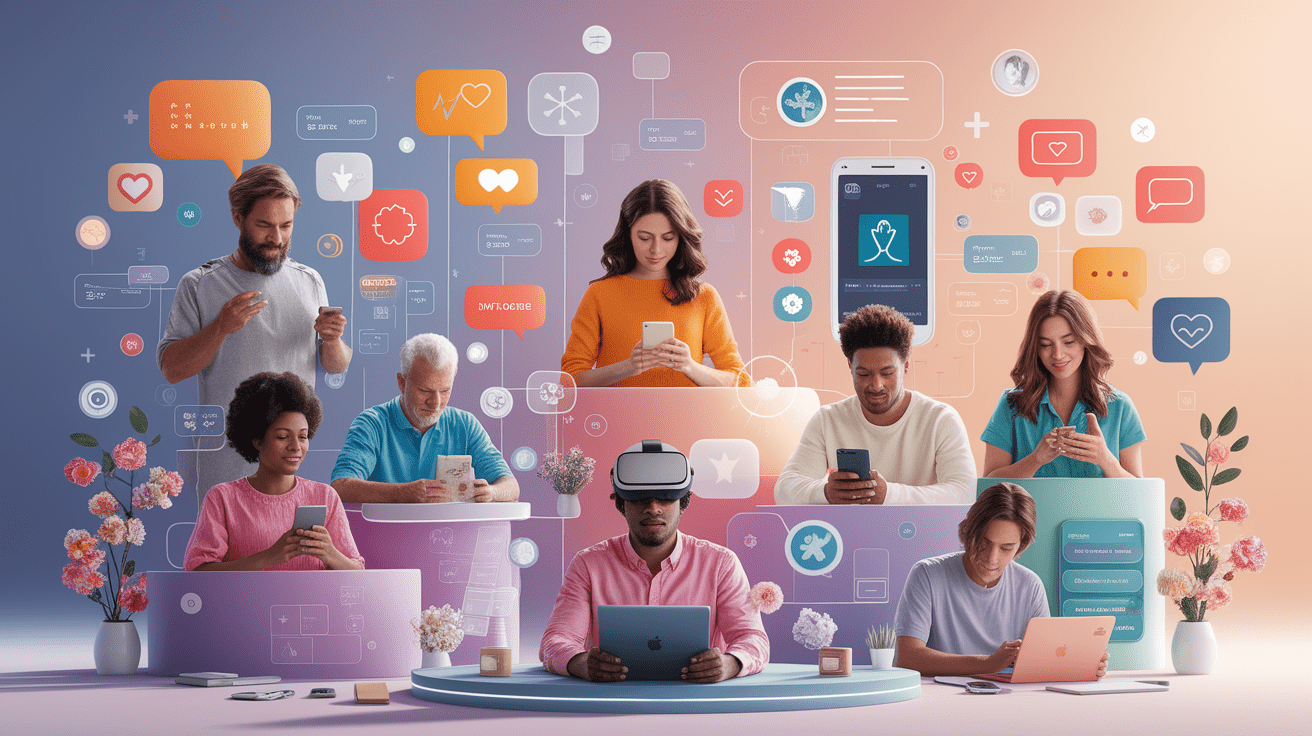
Digital Mental Health Interventions (DMHIs) encompass a diverse range of therapeutic and preventive services delivered through digital technologies. As defined by current taxonomies, these interventions utilize internet platforms, mobile applications, virtual reality, and artificial intelligence to deliver mental health support.
DMHIs can be categorized into four primary types:
- Traditional provider-client interventions delivered remotely: This includes teletherapy and virtual therapy sessions that replicate traditional face-to-face therapy in a digital environment.
- Provider-supported digital interventions: These combine digital tools with professional guidance, creating a blended care approach.
- Guided self-help with minimal human support: Users engage primarily with digital content while receiving limited professional oversight.
- Fully automated self-help tools: These include mental health apps, chatbots, and online programs that function without direct human involvement.
The scope of these interventions is remarkably broad, addressing conditions such as depression, anxiety disorders, PTSD, substance use disorders, and promoting general mental wellness. Systematic reviews indicate these tools can be applied across the continuum of care—from prevention and early intervention to treatment and relapse prevention.
Evidence-Based Digital Approaches
Digital Cognitive Behavioral Therapy (digital CBT) represents one of the most extensively researched approaches, demonstrating effectiveness comparable to traditional delivery methods. Mobile apps for mental health tracking enable users to monitor symptoms, identify triggers, and implement coping strategies in real-time. Virtual reality exposure therapy provides immersive environments for treating phobias and anxiety disorders with promising outcomes.
The World Health Organization has recognized the potential of these technologies, with their Step-by-Step intervention showing effectiveness in reducing depression symptoms among Syrian refugees in Lebanon. This underscores the global applicability of digital solutions, particularly in underserved or crisis-affected populations.
Benefits of Digital Mental Health Interventions
The advantages of digital mental health interventions extend beyond mere convenience, representing transformative improvements in how care is delivered and experienced:
Accessibility and Reach
Digital interventions dramatically expand access to mental health support, overcoming geographical, temporal, and physical barriers. Research highlights that online mental health support can reach populations traditionally underserved by conventional services, including rural communities, individuals with mobility limitations, and those with demanding schedules.
Anonymity and Reduced Stigma
The privacy afforded by digital platforms addresses a significant barrier to seeking help—stigma. Many users report feeling more comfortable disclosing sensitive information through digital media than in face-to-face encounters. Digital wellness tools provide a discreet entry point for those who might otherwise avoid seeking support.

Cost-Effectiveness and Scalability
From an economic and public health perspective, digital interventions offer substantial advantages:
- Lower per-user costs compared to traditional therapy
- Reduction in travel expenses and time commitment for clients
- Ability to serve large populations simultaneously
- Potential integration with existing healthcare systems
Personalization and Data-Driven Care
Modern digital therapeutics leverage user data to provide increasingly personalized interventions. Emerging research demonstrates how digital mental health assessment combined with machine learning algorithms can adapt therapeutic content to individual needs, potentially improving outcomes through precision mental healthcare.
Challenges and Considerations
Despite their promise, digital mental health interventions face significant challenges that must be addressed to ensure their safe and effective implementation:
Efficacy and Quality Concerns
While many ask “are digital mental health interventions effective?” the evidence presents a nuanced picture. Meta-analyses indicate effectiveness for certain conditions, particularly when digital interventions incorporate human support elements. However, the quality and evidence base of available options vary dramatically, with many commercially available apps lacking rigorous validation.
Privacy, Security, and Ethical Considerations
Mental health data is highly sensitive, raising critical questions about how digital platforms protect user information. Concerns include:
- Data security and protection against breaches
- Transparency in data usage policies
- Ethical implementation of AI and algorithmic decision-making
- Potential exploitation of vulnerable users
These issues underscore the importance of robust regulatory frameworks and industry standards to ensure how secure digital mental health platforms truly are.

Digital Divide and Equity
While digital interventions may expand access for some populations, they risk exacerbating disparities for others. Factors such as digital literacy, internet connectivity, and device ownership create barriers that disproportionately affect older adults, lower-income communities, and certain geographic regions. Creating truly inclusive digital mental health ecosystems requires addressing these fundamental access issues.
User Engagement and Adherence
High dropout rates present a significant challenge for many digital interventions. Understanding the factors that influence continued engagement is crucial for developing effective solutions. Research indicates that incorporating human support elements, even minimal contact, significantly improves adherence to digital programs.
The Future of Digital Mental Health
The trajectory of digital mental health points toward increasingly sophisticated, integrated, and personalized approaches:
Advanced Technologies and Integration
Technological advancements are reshaping the possibilities for digital interventions. Artificial intelligence is enabling more responsive and adaptive systems, while virtual reality creates immersive therapeutic environments with unprecedented efficacy for certain conditions. Digital phenotyping—the continuous collection of behavioral data through smartphones and wearables—offers the potential for early detection and intervention before symptoms escalate.

Hybrid Models of Care
Rather than replacing traditional therapy entirely, the future likely involves integrated care models that blend digital and in-person approaches. These hybrid frameworks leverage the strengths of each modality, with digital transformation enhancing rather than replacing human connection. Such models may include:
- Initial assessment and triage via digital platforms
- Stepped care approaches based on symptom severity
- In-person therapy augmented by digital tools for monitoring and skills practice
- Digital maintenance programs following traditional treatment
Evidence-Based Implementation
As the field matures, increased focus on implementation science will help bridge the gap between research findings and real-world application. This includes developing frameworks for evaluating digital interventions, establishing clear guidelines for their integration into existing systems, and creating sustainable funding models.
Conclusion – Embracing Digital Innovation in Mental Health
Digital mental health interventions represent not merely a technological advancement but a fundamental reimagining of mental healthcare delivery. While they cannot and should not fully replace human connection in therapeutic relationships, they offer unprecedented opportunities to extend the reach and impact of mental health services.
The future of mental healthcare lies not in choosing between digital and traditional approaches, but in thoughtfully integrating them to create comprehensive, accessible, and personalized care systems. By addressing current challenges while building on demonstrated strengths, digital mental health interventions can help create a world where effective mental health support is available to all who need it.